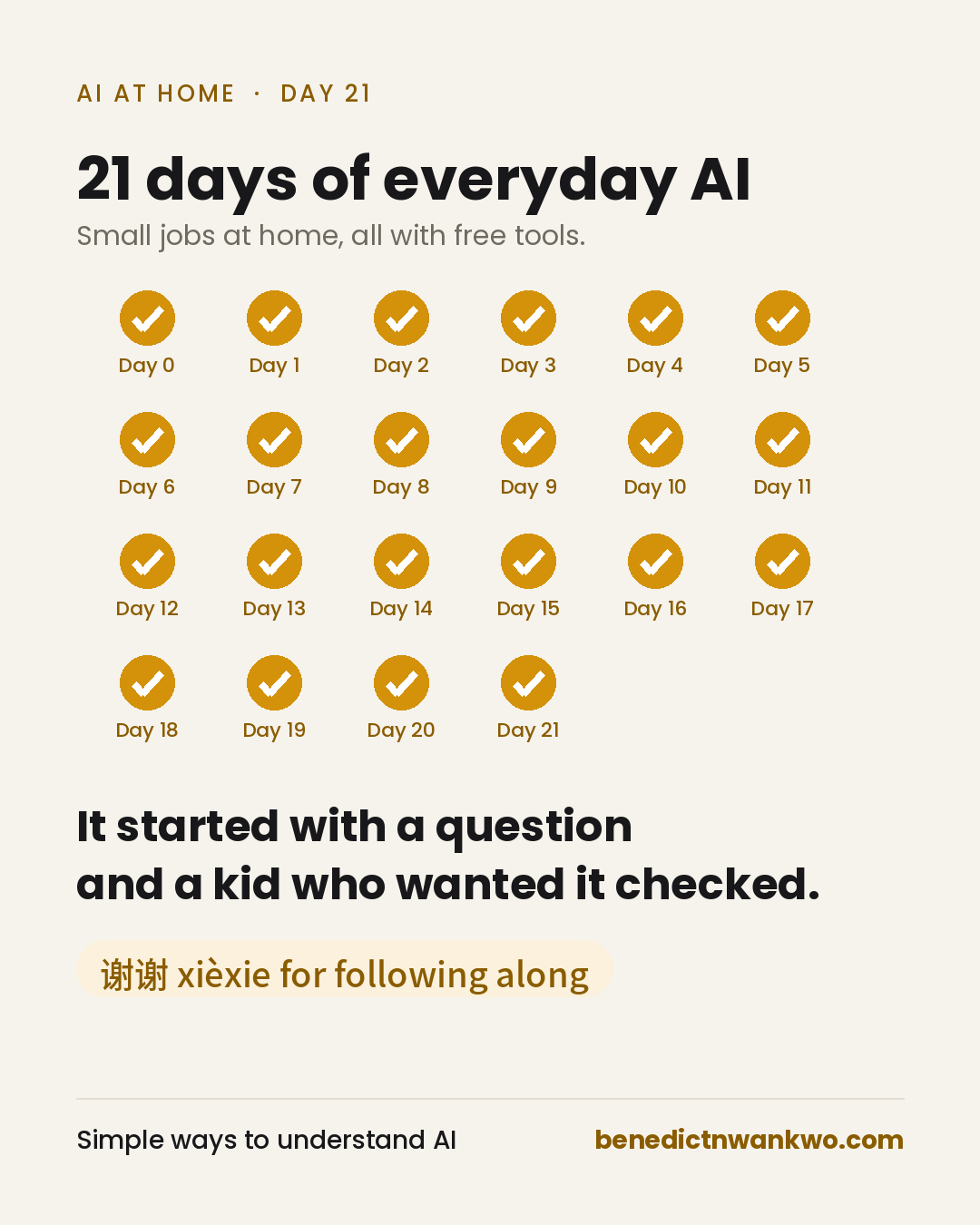
Three weeks ago, Day 1 opened with a fridge full of leftovers and the question of what to make for dinner. Twenty-one days later, the same simple habit has carried us through letters, budgets, homework and a doctor’s visit.
Three weeks in a few lines
In Week 1 we used AI for everyday jobs like dinner, a hard message, a trip plan and a messy grocery list. In Week 2 we moved to life admin, from a lease and a resume to a budget, a firm letter and a birthday party. Week 3 covered things that weigh more, like a doctor’s visit, homework, your rights as a tenant and a school email in plain words.
The pattern that stayed the same
Each day used the same steps. Give AI the real details and say what you need. Then check what comes back, and edit it until it sounds like you. A prompt to keep:
Here is my situation: [the real details]. What I need: [the result]. Keep it [short or detailed]. Tell me what I should check before I use it.
You don’t need to be technical or pay for a plan to start. Pick one real task from your week and try it. The first answer won’t be perfect, so ask a follow-up and fix what is wrong.
Where it started
This series began with my seven-year-old on Thanksgiving. She asked three times how to say thank you in Chinese, and she would not let it go until someone checked. She was right, and the word was xièxie. When a question bugs you, ask it, and then check the answer.
Every day of the series lives here as plain text, so you can go back to any prompt.
What is the one thing from these 21 days you will keep doing?
Yesterday was your personal instruction set for AI (opens in a new tab).
Xièxie for following along.
The examples in this series are constructed scenarios, apart from the Day 0 story. How this was made: AI helped in formatting. See the AI use and editorial policy (opens in a new tab).